

The Ultimate Showdown: Polyaspartic or Epoxy for Your Floors?
Understanding Floor Coating Options: What You Need to Know

Is polyaspartic better than epoxy? The short answer is yes, for most applications. Here’s why:
- Durability: Polyaspartic lasts 20+ years vs. epoxy’s 5-7 years
- Speed: Polyaspartic cures in 1-2 hours vs. epoxy’s 24-72 hours
- UV Resistance: Polyaspartic stays crystal-clear while epoxy yellows
- Flexibility: Polyaspartic is 98-100% more flexible, preventing cracks
- Temperature: Polyaspartic works in extreme conditions, epoxy doesn’t
- Cost: Higher upfront but better long-term value with minimal maintenance
If you’re researching floor coatings for your garage or commercial space, you’ve probably noticed two names keep coming up: polyaspartic and epoxy. Both promise durability and protection, but they’re not created equal.
The confusion is real. Walk into any home improvement store and you’ll see epoxy kits lining the shelves. Search online and you’ll find countless articles comparing the two. Some say epoxy is the budget-friendly choice. Others claim polyaspartic is worth the investment.
So what’s the truth? The reality is that while epoxy has been around longer and costs less upfront, polyaspartic coatings offer superior performance in almost every category that matters. We’re talking faster installation, better resistance to chemicals and UV rays, greater flexibility, and a lifespan that’s three to four times longer.
Think about it this way: your concrete floor takes a beating. Hot tires from your car. Spilled oil and chemicals. Temperature swings from summer heat to winter cold. You need a coating that can handle all of that without cracking, yellowing, or peeling away.
As Hayley Shahbazi, Galaxy Concrete Coatings Manager and a leading expert in Penntek polyaspartic installations, I’ve seen how is polyaspartic better than epoxy isn’t just a question—it’s the key to understanding what your floors really need for long-term protection. Through working with thousands of homeowners and businesses, I’ve developed comprehensive knowledge of how these coatings perform in real-world conditions, and I’m here to break down exactly what makes polyaspartic the superior choice for your investment.
Simple guide to is polyaspartic better than epoxy terms:
Is Polyaspartic Better Than Epoxy? A Cosmic Comparison
When we talk about concrete floor coatings, we’re really discussing how to give your floors an out-of-this-world upgrade. Epoxy has been the traditional choice for decades, forming a thick, hard layer over concrete. An epoxy coating is made from a mix of resin and a hardener, creating a rigid, plastic-like surface. Polyaspartic, on the other hand, is a newer, advanced type of polyurea coating that offers significant advantages. It’s engineered to perform where epoxy often falls short.
Let’s explore the fundamental differences and see why polyaspartic is increasingly becoming the preferred option for those seeking stellar results.
Durability and Lifespan: Which Coating Wins the Space Race?

When it comes to the long haul, polyaspartic coatings truly launch ahead. Our polyaspartic systems are designed for extreme durability and resistance. They are approximately four times stronger and 98-100% more flexible than many epoxy coatings. This flexibility is crucial because concrete naturally expands and contracts with temperature changes. Epoxy, once cured, becomes rigid and brittle, making it prone to cracking, chipping, and scuffing under stress or impact.
Polyaspartic coatings, however, maintain their structural integrity and flexibility, allowing them to absorb impacts and handle heavy loads without succumbing to damage. This superior resilience means our polyaspartic floors reduce the risk of chips, scratches, and scuffs, even in high-traffic areas like garages or industrial spaces.
Beyond physical toughness, polyaspartic also offers exceptional resistance to chemicals. This is vital in spaces where spills are common, such as garages with oil, gasoline, or battery acid, or commercial kitchens. Epoxy coatings can be vulnerable to certain chemicals, leading to stains or degradation over time. Polyaspartic’s robust chemical resistance ensures your floor remains pristine, no matter what extraterrestrial fluids land on it.
A significant advantage of polyaspartic is its resistance to “hot tire pickup.” This common issue with epoxy floors occurs when hot tires from a vehicle cause the epoxy to soften and peel away from the concrete. Polyaspartic forms a stronger bond with the concrete, reducing this risk dramatically and keeping your floor looking flawless, even on busy light manufacturing floors.
In terms of lifespan, the difference is astronomical. While epoxy coatings often require reapplication every 5-7 years, our polyaspartic coatings are engineered to last up to 20 years or more with minimal maintenance. This makes them a truly long-term investment that will withstand the test of time and traffic. We believe in delivering results that stand the test of time, just like the vastness of space, providing a floor that is as durable as it is beautiful.
Installation and Curing: A Warp Speed Difference
One of the most striking advantages of polyaspartic coatings is their rapid curing time, making them a true marvel of modern science. While epoxy coatings typically demand 24-72 hours to fully cure before light foot traffic and even longer for vehicle traffic, polyaspartic coatings cure in as little as 1-2 hours. This means we can often complete an entire floor installation in just one day, allowing for same-day use in many cases. Imagine getting your garage floor transformed and being able to walk on it within hours, and drive on it within 24-96 hours! This is a game-changer for homeowners and businesses alike, minimizing downtime and disruption.
This quick turnaround is especially beneficial for commercial and industrial applications where minimizing operational interruptions is paramount. Our one-day installation process means your business can get back up and running at warp speed.
Furthermore, polyaspartic coatings are far more forgiving when it comes to application conditions. Epoxy coatings have a narrow temperature application window, generally requiring temperatures between 50-90°F. Polyaspartic coatings, however, can be installed in a much wider range of temperatures, from as low as -40°F to over 100°F (with specialized systems). This flexibility allows us to install beautiful, durable floors virtually year-round, regardless of the season’s weather conditions.
The application process for our Polyaspartic Floor Coating is also more efficient. Polyaspartics typically have a simpler 1:1 mix ratio compared to epoxy’s more complex 2:1 to 4:1 ratios, reducing the chance of mixing errors. While DIY epoxy kits are available, the fast pot life and specialized equipment required for polyaspartic make professional installation highly recommended to ensure a flawless and long-lasting finish. We never recommend a DIY approach, as it often leads to costly mistakes and an inferior result that won’t stand the test of time.
UV Resistance and Aesthetics: Avoiding a Black Hole of Fading
Have you ever seen an epoxy floor that’s turned yellow or amber over time, especially near a garage door or window? That’s the effect of UV rays. Epoxy coatings are not UV stable, meaning prolonged exposure to sunlight causes them to yellow, fade, and lose their original luster. This can make your floor look aged and worn much faster than it truly is.
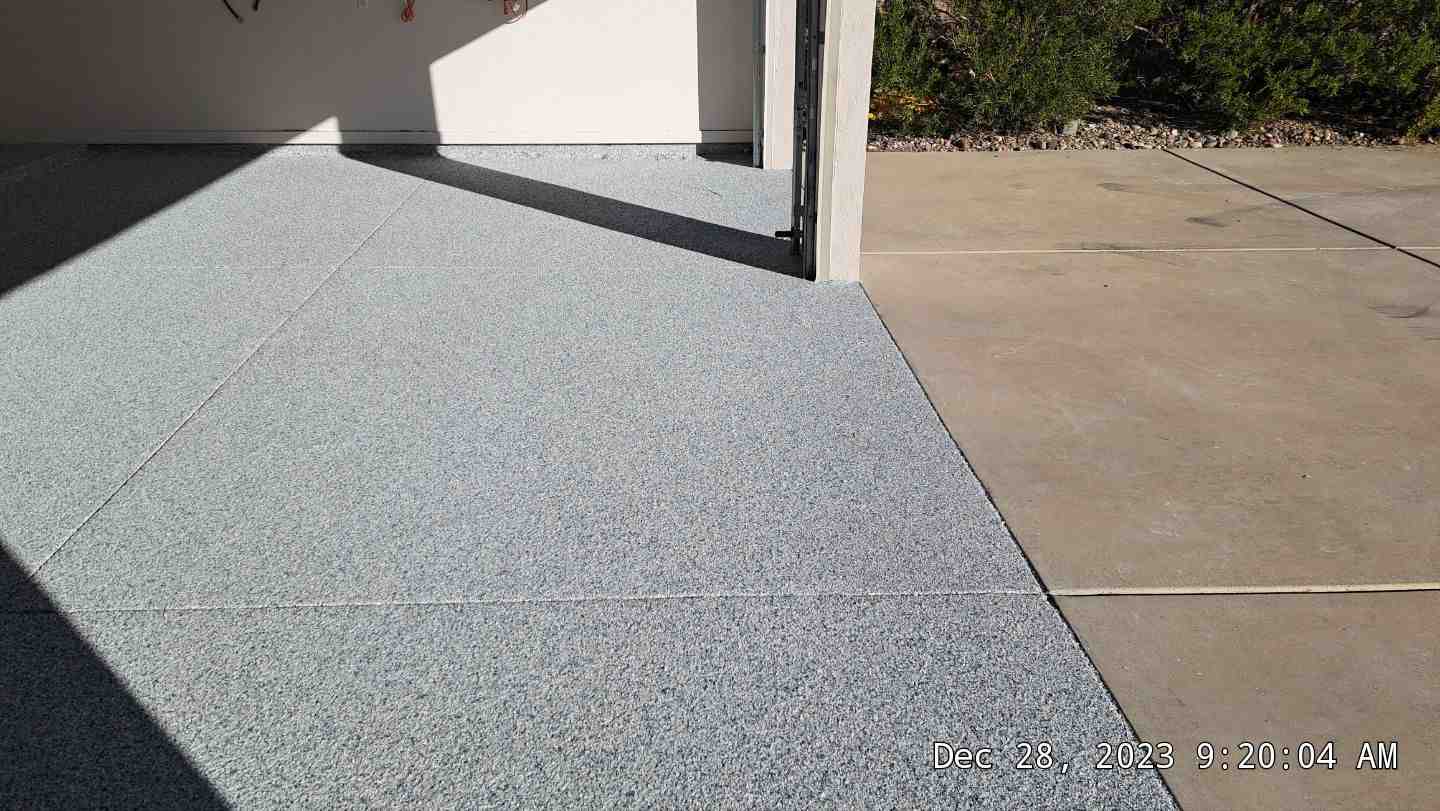
Polyaspartic coatings, on the other hand, are inherently UV stable. This means they maintain their crystal-clear, non-yellowing finish for years, even in direct sunlight. Our polyaspartic garage floors are UV stable and maintain their high gloss for years, ensuring your floor’s colors and topcoat shine won’t fade or degrade over time. This makes polyaspartic the superior choice for outdoor applications like patios and pool decks, and any indoor space with significant natural light exposure, like showrooms.
Beyond maintaining their radiant appearance, polyaspartic coatings offer a universe of aesthetic options. We offer a wide range of colors and decorative flake systems, allowing for endless customization possibilities. Whether you’re looking for a solid color to complement your space or a vibrant flake system to add texture and visual interest, our Polyaspartic Floor Coating Colors Guide can help you envision the perfect look. The flakes not only add beauty but also contribute to improved traction and help to obscure dirt and debris, keeping your floor looking cleaner, longer.
So, is polyaspartic better than epoxy for long-term value?
While epoxy coatings may seem more affordable upfront, often ranging from $4-$10 per square foot, the initial cost doesn’t tell the whole story. Polyaspartic coatings typically have a higher initial price tag, ranging from $5-$12 per square foot. However, when you consider the total cost of ownership, is polyaspartic better than epoxy becomes a clear yes.
Epoxy’s shorter lifespan (5-7 years) means more frequent maintenance, repairs, and eventual reapplication, which adds up significantly over time. Its vulnerability to UV damage, chemicals, and impact also means higher potential for costly repairs, making the initial savings deceptive.
Polyaspartic’s superior durability, chemical resistance, UV stability, and flexibility translate into minimal maintenance and a much longer lifespan (up to 20 years or more). This drastically reduces the need for frequent repairs or reapplication, making polyaspartic a smarter, long-term investment. While the upfront cost is higher, the long-term savings and peace of mind are invaluable.
Investing in a high-quality polyaspartic floor means investing in a durable, beautiful, and low-maintenance solution that will shine on light manufacturing floors or in commercial spaces for decades. The long-term value and superior performance make it a wise choice for any property owner looking for a permanent flooring solution.
Is polyaspartic better than epoxy for safety and application?
Safety is paramount, whether it’s in your home garage or a busy commercial facility. Both polyaspartic and epoxy coatings play a role in creating a safer environment, but their characteristics differ.
When it comes to air quality, polyaspartic coatings generally have lower VOC (volatile organic compound) emissions compared to many traditional epoxy formulations. This makes them a safer choice for indoor applications, contributing to a healthier environment during and after installation. We prioritize using high-quality polyaspartic systems that meet strict environmental standards, ensuring minimal odor and healthier air for our customers and crew.
Slip resistance is another critical factor. A smooth, glossy floor can be slippery, especially when wet. Both epoxy and polyaspartic can be customized with additives like silica sand or decorative flakes to improve traction. However, polyaspartic’s ability to encapsulate flakes more effectively can result in a more consistently textured and slip-resistant surface. This is particularly important for areas prone to moisture, such as pool decks or entryways.
The application process itself also presents safety considerations. Epoxy’s longer cure time can mean extended periods where fumes are present and the floor is inaccessible. Polyaspartic’s rapid cure drastically reduces this exposure time.
While DIY epoxy kits are widely available, we strongly advise against a DIY approach for either coating, especially polyaspartic. Polyaspartic’s short pot life and fast curing require professional expertise and specialized equipment to ensure proper adhesion and a flawless finish. Incorrect application can lead to unevenness, bubbles, and premature failure, turning a supposed cost-saving measure into a costly headache. Our professional team is trained to handle these advanced materials with precision, ensuring a superior result that DIY simply cannot match.
For those exploring Epoxy Flooring Alternatives, polyaspartic stands out as a clear winner. Its advanced formulation offers a stronger bond to concrete, penetrating deeply into its pores to create a truly integrated surface, rather than just a topical layer. This superior adhesion minimizes the risk of delamination and ensures a coating that’s built to last.
The Verdict: Launch Your Floors to a New Dimension
So, is polyaspartic better than epoxy? For most applications, especially those demanding long-term durability, rapid return to service, UV stability, and superior resistance to chemicals and impacts, polyaspartic coatings are the clear champion. While epoxy has its place, particularly as a foundational layer in some multi-coat systems, polyaspartic offers a more advanced, versatile, and ultimately more rewarding solution for your concrete floors.
Our polyaspartic systems are not just floor coatings; they are investments in the longevity, safety, and aesthetic appeal of your space. With our expertise and commitment to quality, Galaxy Concrete Coatings brings you a flooring solution that is truly out of this world. We offer one-day installation and a lifetime warranty, giving you peace of mind that your floors are protected for the long haul.
We’re proud of our 5-star reputation and the stellar feedback we receive from customers across the galaxy. We strive for excellence in every project, ensuring your experience is as brilliant as your new floor.
Ready to transform your concrete floors into a celestial masterpiece? Choose Galaxy Concrete Coatings and experience the superior performance and lasting beauty of polyaspartic. We’re here to help you launch your floors to a new dimension! Explore the full comparison at Polyaspartic vs. Epoxy Floor Coatings.