

From Sticky to Slick: A Guide to Fixing Hot Tire Pickup
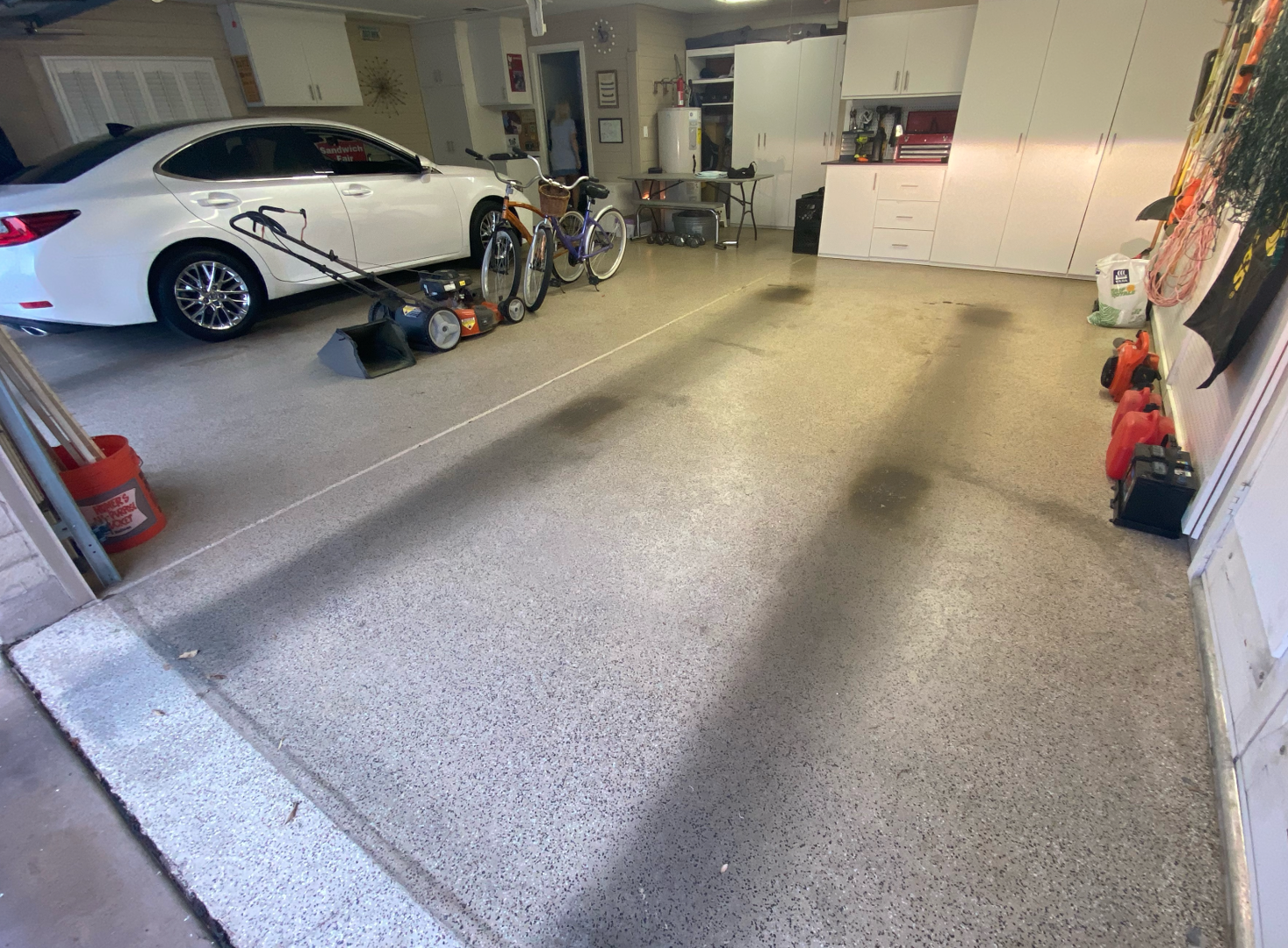
The Black Marks That Signal Garage Floor Trouble
Dealing with repair hot tire pickup damage is one of the most frustrating problems for homeowners. Those unsightly black marks and peeling sections where your tires rest are more than just cosmetic flaws—they signal a coating failure that will only worsen over time.
Most quick fixes fail because they don’t address the root cause. Hot tire pickup occurs when heat from your tires causes chemicals called plasticizers to leach out and bond with an inferior floor coating. As the tires cool and contract, they pull the coating right off the concrete. The only permanent solution is to remove the failed material and upgrade to a professional, heat-resistant system. This guide will walk you through understanding the problem and finding a lasting fix.
What is Hot Tire Pickup and Why Does it Happen?
When you park in your garage after a long drive, your hot tires can wreak havoc on your floor coating. The process is called hot tire pickup, and it’s a frustrating chemical reaction. Your tires contain chemicals called plasticizers to keep the rubber flexible. After driving, tires can reach temperatures of 135-150°F. This heat causes the plasticizers to soften and migrate out of the rubber, bonding with your floor coating.
As the tires cool over several hours, they contract and create a powerful suction effect. If the coating isn’t strong enough, it gets yanked right off the concrete, leading to delamination and peeling.
Several factors increase the risk:
- Tire Composition: High-performance and softer tires contain more plasticizers, making them stickier when hot.
- Coating Quality: Standard epoxy coatings, especially DIY kits, have low heat tolerance (around 150°F) and soften easily.
- Environmental Heat: In summer or warmer climates, your floor is already warm, making it more susceptible.
- Poor Surface Preparation: If the coating isn’t bonded properly to the concrete, it has no chance of resisting the pull from hot tires.
This is why Galaxy’s advanced polyaspartic coatings are engineered for superior performance. They offer higher heat tolerance and create a powerful molecular bond that resists plasticizer migration. To learn more about how our systems work, explore The Science Behind Durable Concrete Coatings. Understanding the cause is the first step to properly repair hot tire pickup and prevent it for good.
The Ultimate Guide to Repair Hot Tire Pickup Damage
When hot tire pickup strikes, a proper repair requires more than a quick fix from the hardware store. To achieve a lasting solution, you must assess the damage correctly and understand why most temporary patches fail. For comprehensive solutions, explore our Concrete Floor Repair Services.
Step 1: Assess the Damage and Understand Why DIY Fails
First, identify the extent of the problem. Are you seeing dark, sticky surface stains? Or has the damage progressed to peeling layers that lift in the shape of your tire tread? The most severe stage is deep delamination, where chunks of concrete come up with the failed coating, signaling a catastrophic failure of the bond between the coating and the slab.
This is where the temptation of a DIY repair kit can lead to more frustration. These kits are plagued with problems:
- Color Matching Issues: It’s nearly impossible to match the color and sheen of your existing floor, leaving you with ugly, obvious patches.
- Adhesion Failure: DIY kits lack the industrial-grade materials and equipment for proper surface preparation. Applying a patch over a contaminated or weak surface is a recipe for failure.
- Wrong Materials: Consumer-grade patches use the same weak resins that failed in the first place. They don’t have the heat resistance to prevent the problem from happening again.
In short, temporary patches and DIY repairs are like putting a bandage on a deep wound—they don’t address the underlying issue. The same heat and plasticizers that caused the initial damage will quickly destroy the patch. A professional repair using industrial-grade equipment and advanced materials is the only way to guarantee a permanent solution. Learn more about our approach on our repair system page.
Launching a Defense: How to Prevent Hot Tire Pickup for Good
The best way to repair hot tire pickup is to install a system that prevents it from ever happening again. This defense strategy involves choosing a superior coating, ensuring professional installation, and performing simple maintenance.
The Best Offense is a Stellar Coating: Polyaspartic vs. Other Coating Types
The coating you choose is your primary defense. While many options exist, polyaspartic coatings are the clear winner for preventing hot tire pickup due to their superior heat resistance and durability.
| Feature | Polyaspartic (Galaxy’s Choice) | Epoxy | Acrylic |
|---|---|---|---|
| Heat Resistance | Excellent (up to 200°F) – Highly resistant to tire heat | Good (up to 150°F) – Can soften, prone to pickup | Poor – Very susceptible to softening and pickup |
| Durability | Superior – Extremely abrasion and chemical resistant | Good – Can be brittle, prone to chipping/scratching | Low – Wears quickly, not ideal for high traffic |
| Cure Time | Rapid (1-day installation) – Walkable in hours, vehicle-ready in 24 hrs | Long (3-7 days) – Extended downtime | Fast – But offers minimal protection |
| UV Stability | Excellent – Non-yellowing, maintains clarity | Poor – Can yellow and chalk over time, especially in sunlight | Fair – Can degrade with UV exposure |
| Flexibility | High – Moves with concrete, resists cracking | Low – Brittle, prone to cracking with concrete movement | Low – Can become rigid and crack |
| Adhesion | Exceptional – Strong bond to properly prepared concrete | Good – But relies heavily on perfect preparation | Moderate – Often just a surface film |
Polyaspartic benefits are clear: its high heat tolerance, flexibility, and rapid one-day installation make it the ideal choice. In contrast, epoxy weaknesses like lower heat resistance and brittleness make it vulnerable, while acrylic weaknesses like low durability make it unsuitable for garages. Galaxy exclusively uses polyaspartic systems to deliver results that last. Learn more at Polyaspartic vs Epoxy Floor Coatings.
The Critical Role of Surface Preparation and Curing
Even the best coating will fail without proper surface preparation. At Galaxy, we use diamond grinding to mechanically profile the concrete, removing contaminants and creating an ideal surface for a tenacious bond. This method is far superior to acid etching, which only cleans the surface and can interfere with adhesion. Our process creates a strong mechanical bond that becomes part of the concrete itself.
The polyaspartic fast cure means your floor is walk-on ready in hours and vehicle-ready in 24 hours, a significant advantage over multi-day epoxy systems. See our full method at Surface Preparation by Galaxy Concrete Coatings and learn about our installation process.
Maintenance and Protective Measures
To keep your stellar floor looking its best, simple maintenance goes a long way. Consider using parking pads or tire mats for extra protection, especially with high-performance vehicles. Regular cleaning with a pH-neutral cleaner prevents contaminant buildup. While our coatings are built to handle the heat, letting tires cool briefly after long drives can also help minimize thermal stress. For more on tire care, the Tire Industry Association is a helpful resource.
Frequently Asked Questions about Hot Tire Pickup
We hear many of the same questions from homeowners looking to repair hot tire pickup damage. Here are some quick, stellar insights.
Can you just paint over hot tire marks?
No. Painting over the marks is a temporary fix that covers up the problem without solving it. The marks indicate the original coating has failed. New paint won’t bond properly to the compromised surface and will quickly begin to peel and flake, often looking worse than before. A real repair involves removing the failed coating and applying a high-quality, heat-resistant material.
Are some car tires worse than others for hot tire pickup?
Absolutely. High-performance tires, often found on sports cars, use softer rubber compounds with more plasticizers to improve grip. This “stickier” nature makes them far more likely to bond with a floor coating when hot. However, even standard tires can cause damage if the floor coating is low-quality or was poorly installed.
Why did my professionally installed floor still get hot tire pickup?
This is a frustrating but common issue that highlights a hard truth: not all “professional” installations are equal. Failure often stems from one of three things: inadequate surface preparation (e.g., using acid etching instead of diamond grinding), the use of low-quality coatings with poor heat resistance, or insufficient curing time. Choosing an expert who uses advanced materials is critical. At Galaxy, our Galaxy Polyaspartic Concrete Coating system and meticulous installation process are specifically designed to prevent this problem.
Conclusion: Achieve an Out-of-this-World Floor That Lasts
When those black marks appear, you have a choice: a temporary patch that will fail again, or a permanent upgrade that protects your investment for decades. To truly repair hot tire pickup, you must address the root cause with a system engineered to withstand the heat.
Hot tire pickup is completely preventable. Galaxy Concrete Coatings launches your floor into a new dimension of performance with our advanced polyaspartic systems. With superior heat resistance, flexibility, and a bond stronger than any hot tire’s pull, we don’t just fix your floor—we make it virtually indestructible. Our professional diamond grinding preparation and rapid 24-hour cure time mean you can forget about hot tire pickup for good.
Don’t let your garage floor suffer from earthly problems. Trust the stellar team at Galaxy for a solution that’s truly out of this world, backed by five-star reviews and a lifetime warranty. Ready to blast off to a better garage floor? Learn more info about our garage floor coatings.