Garage Floor Coatings: Best Options for Durability and Style
Garage Floor Coatings: Quick Comparison & Why They Matter
Garage Floor Coatings can completely transform your space—protecting concrete, adding style, and making cleaning a breeze. If you’re comparing options right now, here’s what you need to know:
Which Garage Floor Coating Is Best?
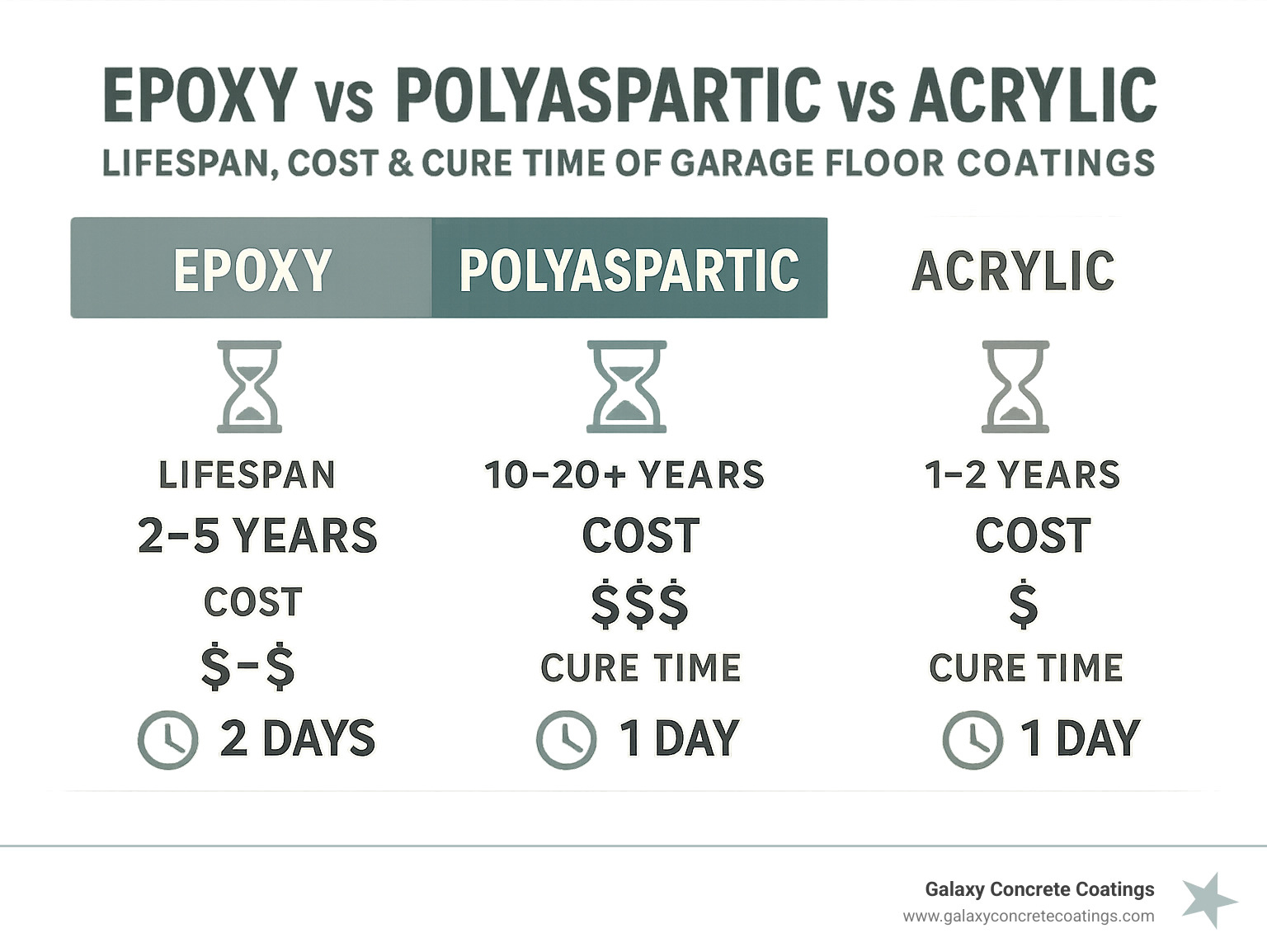
| Type | Durability | Lifespan | Cure Time | Slip Resistance | DIY Friendly | Cost |
|---|---|---|---|---|---|---|
| Epoxy | Good | 2-5 years | 2+ days | Can be slippery | Yes | $-$$ |
| Polyaspartic | Excellent | 10-20+ years | 1 day | Textured options | Pro only | $$$ |
| Acrylic Paint | Poor | 1-2 years | 1 day | Low | Yes | $ |
| Sealers | Basic | 1-2 years | 1 day | Low | Yes | $ |
Quick Facts:
- Epoxy is the common DIY choice, but may peel or yellow over time.
- Polyaspartic (what Galaxy uses) is UV-stable, extremely durable, and cures in just one day—with a lifetime warranty.
- Acrylic paint and sealers are temporary solutions, not true protection.
- Proper installation and diamond grinding prep are key for a floor that lasts.
“Polyaspartic will take whatever you throw at it, and if not, they’ll replace it.”
— Homeowner, on polyaspartic durability
The right Garage Floor Coating can turn cracked, stained concrete into a bright, tough, easy-clean floor—ready for cars, tools, and life’s messes. This guide will break down every option, so you can pick what fits your needs (and avoid regrets).
My name is Hayley Shahbazi. As the manager at Galaxy Concrete Coatings, I’ve overseen hundreds of Garage Floor Coatings projects across Colorado, Indiana, Arizona, and Greater Cincinnati. My team specializes in advanced polyaspartic coatings, delivering beautiful, long-lasting results every time.
What This Guide Covers
Before you launch into Garage Floor Coatings, it’s smart to know what’s truly involved. This guide is your mission control—for everything from comparing products to understanding exactly why some floors shine for decades, while others peel before you’ve even parked the car.
Here’s what you’ll find as we explore the galaxy of coatings:
You’ll get a clear look at all the major garage floor coating types, with an honest breakdown of how they stack up—think epoxy, polyaspartic, acrylic paint, and simple sealers. We’ll talk about real cost ranges (for both DIY dreamers and those who want a pro finish), so you know what to budget—no cosmic surprises.
Ever wondered why some coatings last and others flake out? We’ll reveal why surface prep is as crucial as rocket fuel for your floor’s success. Safety is on our radar, too—we’ll cover how to keep your garage floor slip-resistant, and easy to clean, whether you’re dealing with oil, salt, or muddy boots.
You’ll learn about longevity and maintenance: what makes a coating last years instead of months, and the top regrets people have after choosing the wrong system. If your garage doubles as a heavy-duty auto shop or workshop, don’t worry—we’ll explain what to expect and which options can handle the pressure.
Finally, we’ll guide you on how to choose the right coating for your space—factoring in your budget, climate, project goals, and how much DIY you want to tackle (spoiler: pros like Galaxy can save you hassle and get it right the first time).
So, ready to take your concrete out of this world? Let’s get started—stellar floors await!
Garage Floor Coatings: Types, Pros & Cons
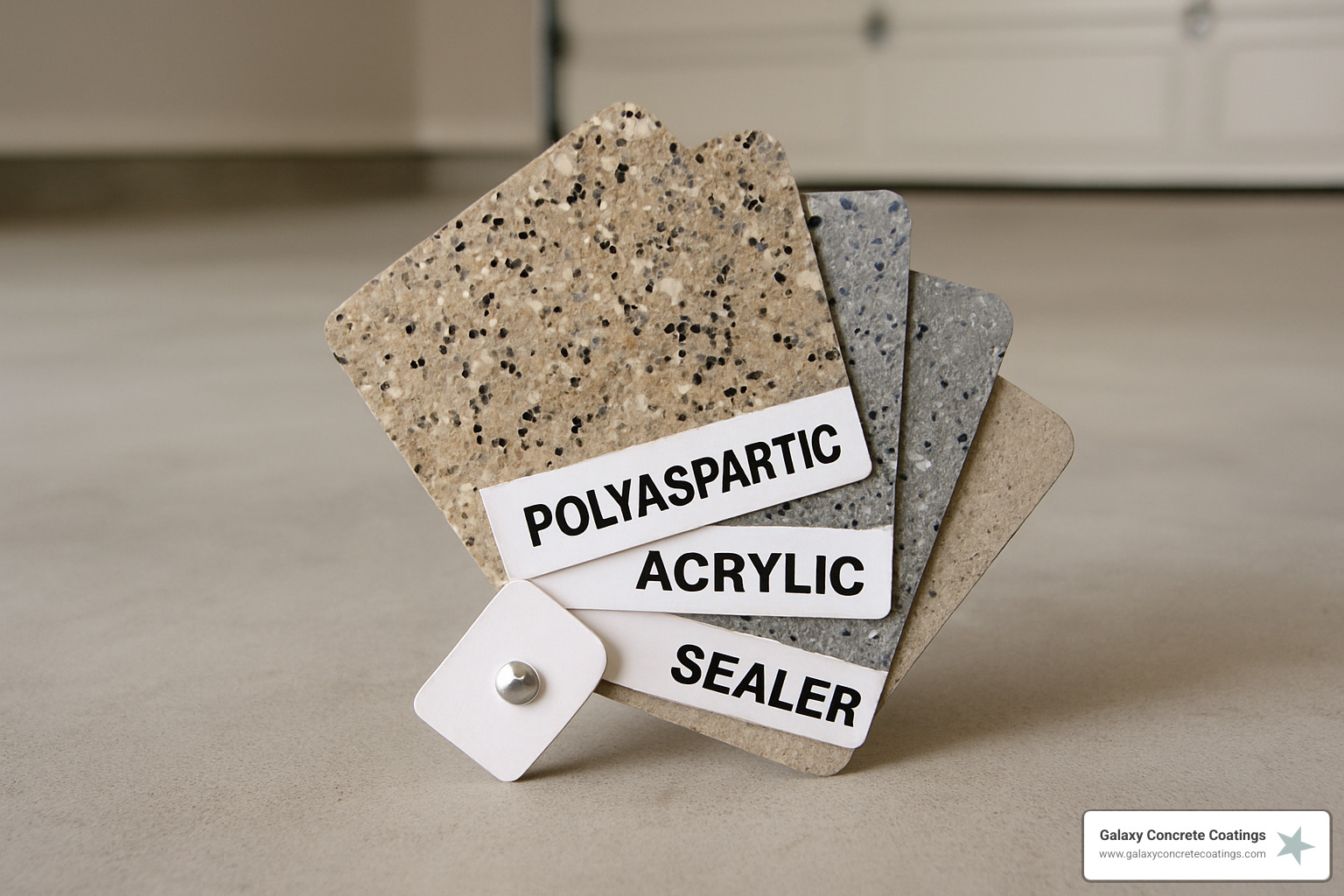
Choosing the right Garage Floor Coating is a bit like assembling your own starship crew—you want strength, reliability, and maybe a bit of cosmic flair. Let’s take a closer look at the main options on your launchpad.
Epoxy Garage Floor Coatings
Epoxy is the classic go-to for many DIY weekend warriors. You’ll find epoxy kits stacked high in home improvement aisles, promising a new look for less. For a typical two-car garage, you’ll spend about $100–$500 on materials, plus a healthy dose of elbow grease (and possibly a few sighs of frustration).
On the plus side, epoxy is budget-friendly, comes in a rainbow of colors and chip blends, and is widely available. But here’s the not-so-secret downside: the lifespan is short—usually just 2–5 years with typical DIY install, and maybe up to 7 years if a pro handles the prep and application. Over time, epoxy floors have a habit of peeling, yellowing in the sun, and suffering hot-tire pickup (that’s when the coating sticks to your car tires and lifts right off the floor). It can also be slippery, slow to cure (expect 2–4 days of garage downtime), and stubborn about stains.
A common regret we hear from homeowners is, “I wish I’d gone with a pro—or just skipped straight to polyaspartic.” Slipping, chipping, and faded shine top the list of complaints.
“Epoxy floors are slippery when wet and make it hard to spot dropped hardware.”
— Garage owner, reflecting on DIY epoxy experience
Curious how epoxy stands up to polyaspartic? Hang tight—the showdown’s coming up!
Polyaspartic Garage Floor Coatings
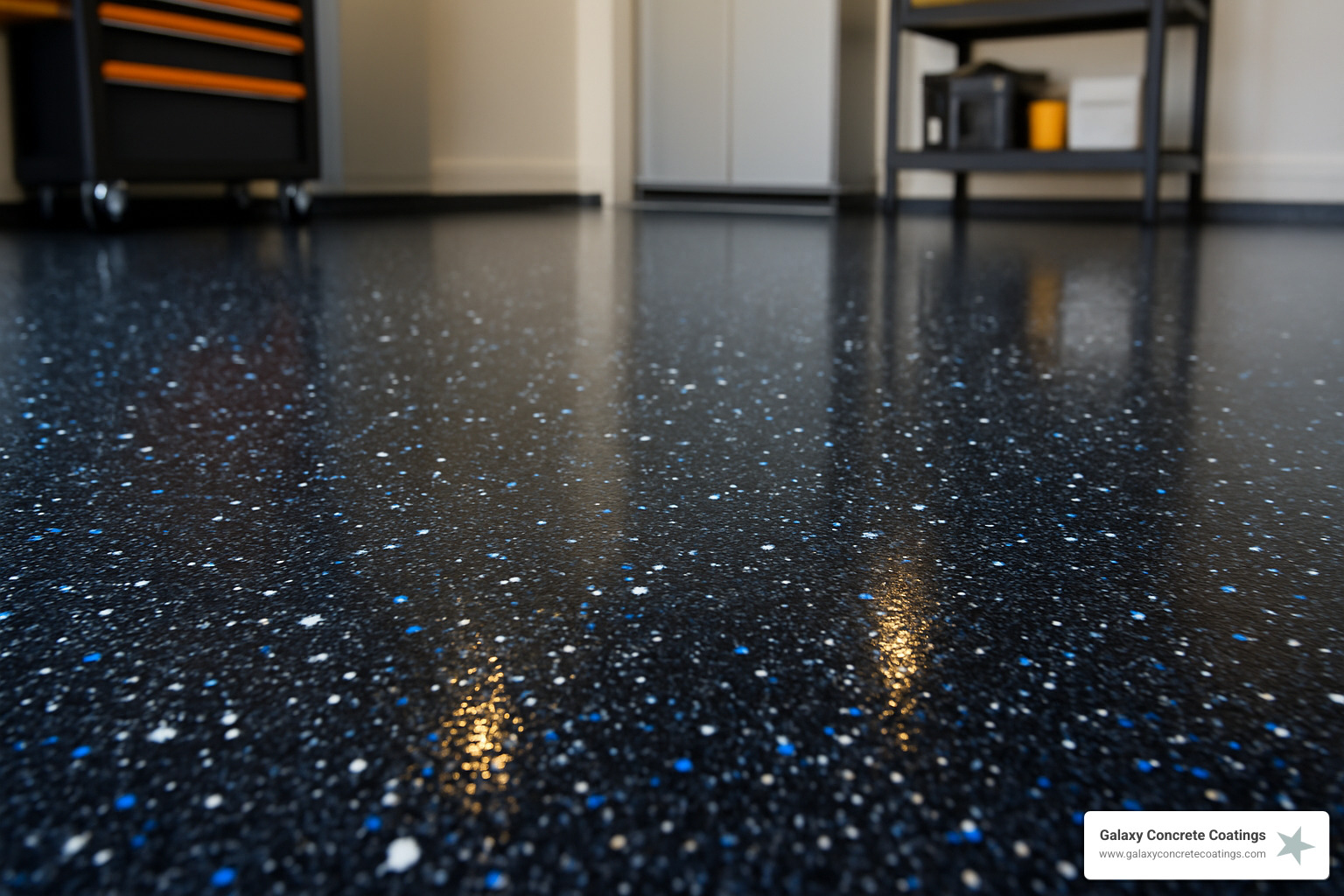
Now let’s talk true space-age performance: polyaspartic. This is the system Galaxy installs, and it’s the gold standard for anyone who wants a garage floor built to survive meteor showers (or, you know, oil spills and dropped tools).
Polyaspartic coatings are not DIY—they require expert prep, pro equipment, and a steady hand. But the rewards are real: the whole process is done in just one day, so you’re back to parking that night. And the lifespan? We’re talking 10–20+ years, with many floors lasting even longer if you give them basic care.
What sets polyaspartic apart? Think UV-stability (no yellowing), boostd durability against salt, chemicals, and hot tires, and a beautiful, high-gloss “galaxy” finish with endless decorative flake options. Slip-resistant textures and grit additives are available, too, helping you stay upright on rainy days.
Upfront, polyaspartic costs more—typically $2,000–$6,000 for a standard 2–3 car garage, and higher for larger or heavily damaged floors. But you get what you pay for: low-maintenance, long-lasting beauty, and a lifetime warranty from Galaxy. If your floor ever faces a cosmic catastrophe, we’ve got you covered.
“One user did an engine swap on a polyaspartic floor and reported no issues under heavy loads.”
— Forum report
Want to see the real differences? Our Polyaspartic vs Epoxy Floor Coatings guide has the details!
Other Options: Acrylic, Sealers
If you’re looking for a quick refresh, acrylic paint offers a fast, cheap facelift for tired concrete. It’s easy to roll on and dries in a day, but don’t expect miracles—acrylic paint lasts just 1–2 years and chips or stains with regular garage use.
Concrete sealers—whether penetrating or topical—add a thin shield, slowing down water, oil, and salt damage. But, they won’t stop tire marks, scratches, or heavy wear. You’ll need to reapply often, and there’s no real protection against the big threats your garage floor faces.
In short: these are budget choices for light-use spaces, but they’re mostly cosmetic.
What about the alternatives? Just for comparison, there are other floor covering ideas out there:
- Garage floor tiles (interlocking plastic or PVC) snap together for a custom look, but don’t actually protect your concrete.
- Polished concrete gives a shine but needs regular sealing and pro equipment.
- Rubber coatings are designed for gyms, not garages with cars.
- Porcelain tile is tough but pricey and not DIY-friendly.
If you want true protection and out-of-this-world style, professional-grade polyaspartic coatings from Galaxy are in a solar system of their own. The difference is more than cosmetic—it’s about real long-term value and peace of mind.
Epoxy vs Polyaspartic Showdown: Durability, Cost & Maintenance
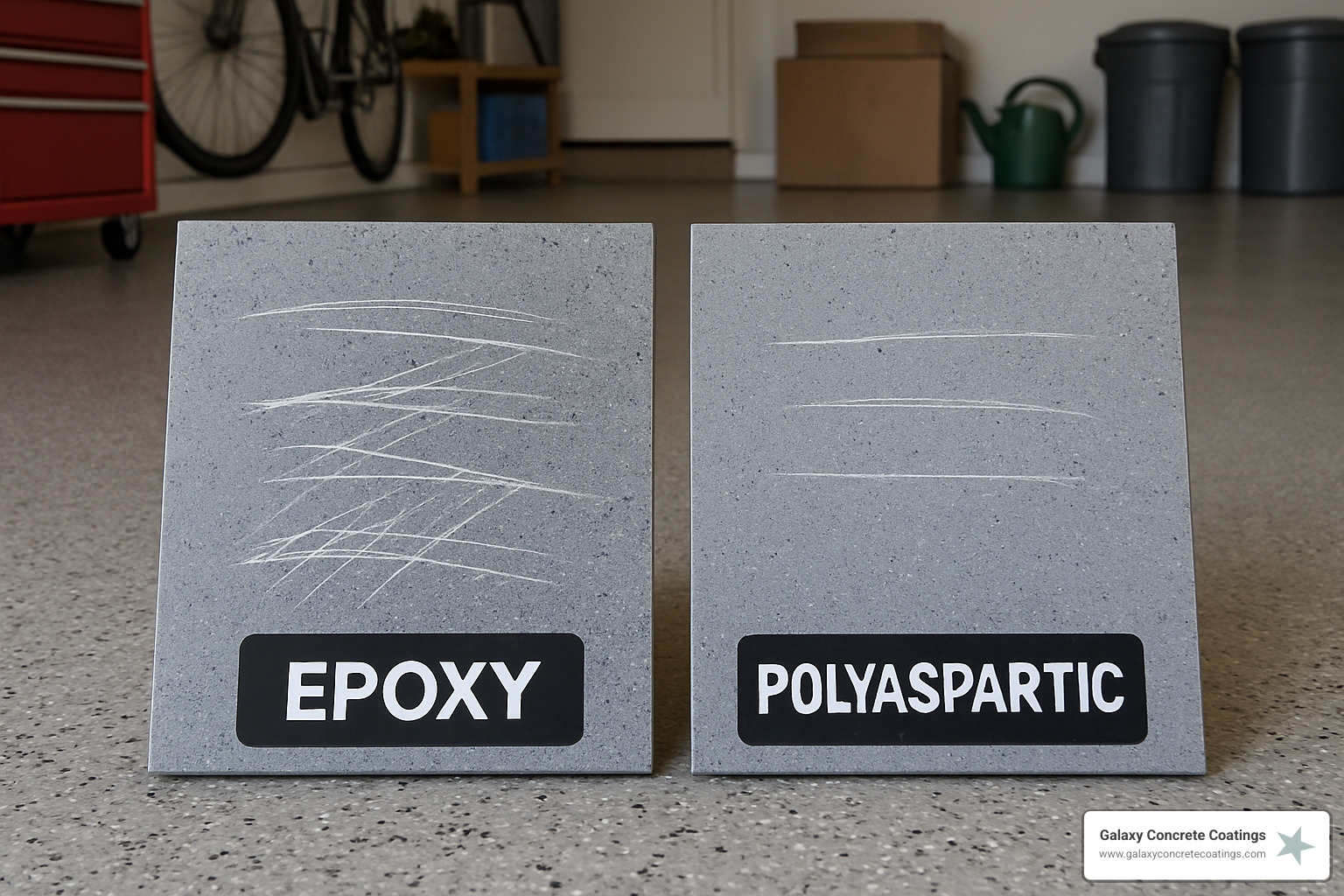
Ready for a true battle of the coatings? Let’s step into the ring and see how epoxy and polyaspartic stack up when it comes to real-life garage floors.
Epoxy vs Polyaspartic At a Glance
If you’re after a quick comparison, here’s how these two contenders measure up:
| Feature | Epoxy | Polyaspartic (Galaxy) |
|---|---|---|
| Cure Time | 2–4 days | 1 day (park overnight!) |
| Hardness | Good | Excellent (4x stronger) |
| UV Stability | Poor (yellows/fades) | Excellent (won’t yellow) |
| Lifespan | 2–5 years (DIY), 7 max | 10–20+ years |
| Warranty | 1–3 years (DIY), 5 max | Lifetime (with Galaxy) |
| Cost | $200–$2,000 (DIY/pro) | $2,000–$18,000 (pro) |
| Slip Resistance | Needs additive | Textured/flake options |
| Chemical Resist. | Decent | Outstanding |
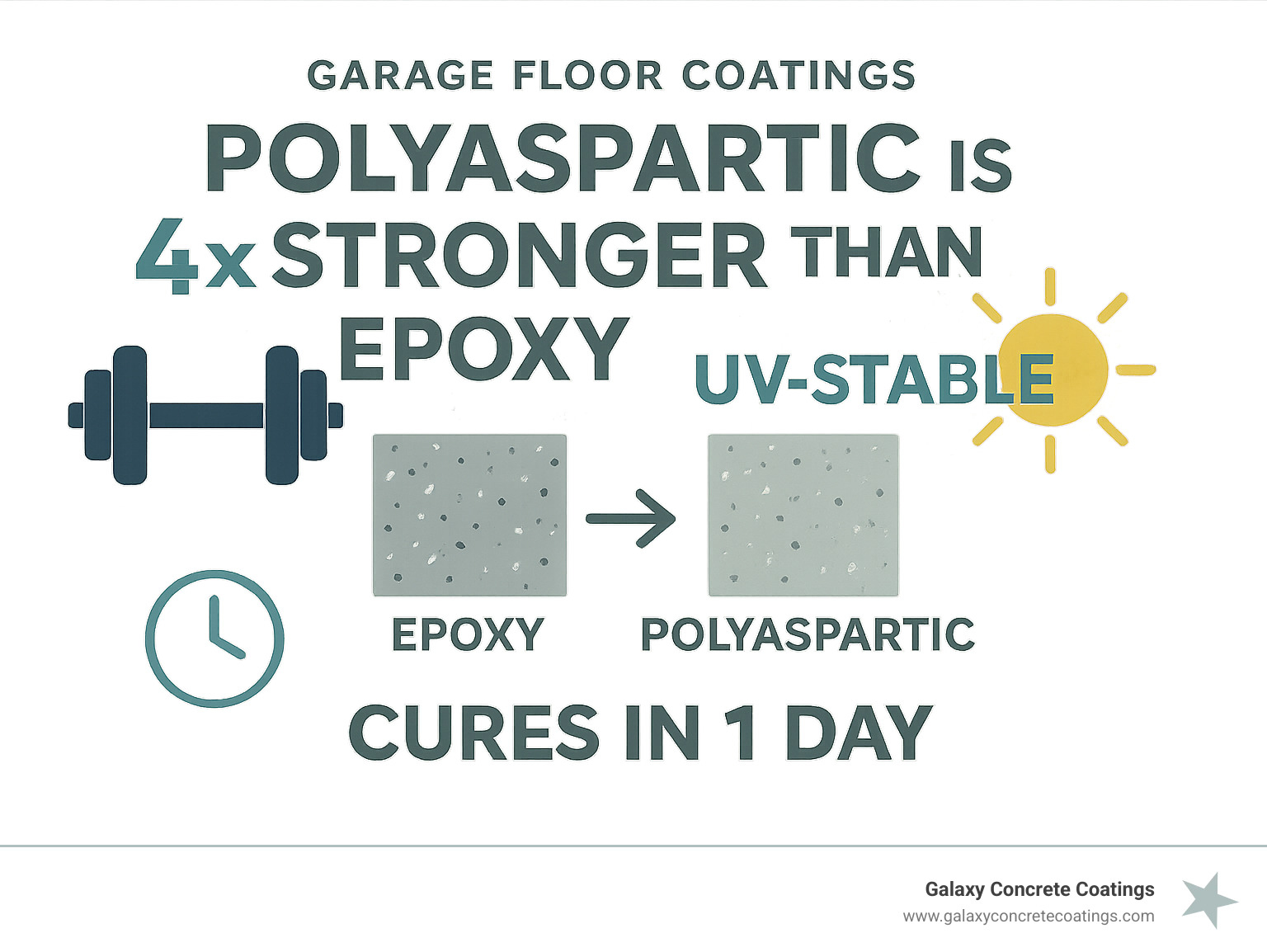
With epoxy, you’re signing up for several days of not touching your garage and hoping your hard work pays off. Its finish is good at first, but it just can’t handle the heat—or the sun. Expect yellowing and fading over time, especially in brighter garages.
Polyaspartic, on the other hand, is all about speed and toughness. Park your car on it the very next day, and don’t worry about the sun—these coatings don’t yellow or fade. They’re four times as strong as epoxy, and they laugh in the face of chemical spills, salt, and heavy use.
Lifespan & Warranty
When it comes to staying power, the difference is night and day. Most epoxy floors installed by DIYers start to peel, chip, or look tired after just 2 to 5 years. Even with a professional install (and perfect prep), 7 years is usually the max before you’re back in the same boat. Hot tires, salt, and heavy garage action can wear them down fast.
Polyaspartic, especially the kind used by Galaxy Concrete Coatings, is built for the long haul. With the right prep, it will last 10–20 years or more, even with dropped tools, rolling jacks, and those mystery garage spills. And with Galaxy, every floor comes with a lifetime warranty. You won’t find that kind of peace of mind with epoxy!
Worried about the weather? Polyaspartic can handle both sweltering Arizona heat and harsh Midwest winters. It flexes and moves with your concrete, so cracking is never a worry.
“A well-installed polyaspartic or polyurea floor can last 10–20 years or more with proper maintenance, while DIY epoxy floors may show significant wear in as little as 2–5 years.”
If you need a garage floor that’s truly industrial strength, check out our Solid Color Polyurea System for next-level durability.
Installation & Surface Prep Essentials
The secret to a beautiful, long-lasting floor? It’s all about the prep. Diamond grinding is the gold standard, opening up the concrete so the coating forms a tight molecular bond. Forget acid etching—modern coatings need more than a quick rinse to really grip.
Before coating, the pros at Galaxy always run a moisture test—especially important for newer slabs or humid climates. Trapped moisture under your coating can spell disaster. Cracks and pits? Those get filled and leveled so your new surface is smooth as the moon’s surface (but way easier to clean).
Professional tools like grinders, vacuums, and mixers make all the difference. Most DIY kits skip these steps, so those floors just don’t last.
“Diamond grinding shot blasting is the only way to prepare a concrete surface to accept the epoxy floor systems, even if the concrete was poured 2 months before.”
— Industry pro
Feeling creative? Galaxy can deliver a custom galaxy swirl or metallic look—see the Custom Floor Coatings gallery for far-out inspiration.
Safety, Traction & Cleaning
A garage floor shouldn’t feel like an ice rink! Both epoxy and polyaspartic can be slippery if left glossy. But here’s where polyaspartic shines: it’s easy to add grit, quartz, or decorative flakes for safe, slip-resistant traction. Want a little sparkle or extra grip for winter boots and oil spills? Polyaspartic has you covered with customizable textures.
Maintenance is practically space-age simple. Just sweep or mop—sealed floors repel oil, salt, and chemicals. No more scrubbing stains for hours. Polyaspartic stands strong against motor oil, brake cleaner, transmission fluid, and road salt, while epoxy often struggles to keep up.
“Rolling in a snow-covered car and not worrying about moisture damage.”
— Homeowner, on polyaspartic floor peace of mind
Curious how acrylic measures up? Our Acrylic Garage Floor guide breaks it down.
Choosing the Right Garage Floor Coating for Your Space
Picking your perfect Garage Floor Coating doesn’t need to be rocket science—it’s all about what you need from your garage, your budget, and your dreams for the space.
If you want the cheapest upfront cost and don’t mind getting your hands dirty, epoxy might look good (for a little while). But many DIYers end up disappointed when their floor peels, yellows, or needs a redo after just a few years. With polyaspartic, you’re investing in one-and-done durability, dazzling style, and a warranty that’s truly out of this world.
Consider your climate, too. Only polyaspartic works in very hot or very cold temps—epoxy simply can’t handle the extremes. Thinking resale? Polyaspartic’s “wow” factor, color options, and glossy finish impress future buyers every time.
And if your garage doubles as a workshop, gym, or hangout, polyaspartic easily stands up to dropped tools, rolling toolboxes, and heavy-duty use. Plus, Galaxy’s coatings are low-VOC and family-safe.
Still not sure? Our guide—How to Choose the Best Concrete Coating—has tips to launch your decision.
If you want a floor that’s as stellar as the rest of your home, trust Galaxy Concrete Coatings to take your garage out of this world.
Conclusion & Stellar Takeaways
When it comes to Garage Floor Coatings, Galaxy Concrete Coatings is truly in a league of its own. We don’t just coat your concrete—we launch it into a whole new stratosphere. With our advanced polyaspartic coatings, you get the kind of durability, shine, and easy care that leaves old-school epoxy floating in the dust.
Think about it: why live with a floor that cracks under pressure, peels from hot tires, or fades faster than a shooting star? Our polyaspartic floors are UV-stable, chemical-proof, and built to withstand everything from muddy boots to major wrenching sessions—while looking absolutely stellar.
What really sets Galaxy apart? First, we stand behind every floor with a lifetime warranty—no black holes or disappearing acts if something goes wrong. If your floor fails, we’ll fix it, guaranteed. And forget waiting around for days: with our one-day installation, you can be back to parking, tinkering, or launching family projects by that evening.
Our customers love that Galaxy floors don’t just perform—they turn garages into showrooms. From the dazzling “galaxy-shiny” look to the smooth, easy-clean surface, your space will be ready for anything. Don’t just take our word for it—check out our glowing reviews from real homeowners across Denver (Denver page, Denver Google), Phoenix (Phoenix page, Phoenix Google), Tucson (Tucson page, Tucson Google), Cincinnati (Cincinnati page, Cincinnati Google), and Indianapolis (Indianapolis page, Indianapolis Google). Homeowners across these cities rave about our friendly, expert crews and the out-of-this-world change we deliver.
If your garage is still stuck in the Stone Age (or even just the DIY aisle), now is your chance to upgrade. See what makes our Garage Floor Coatings so popular, and find why more and more homeowners are choosing Galaxy every year.
Don’t let your garage get lost in the void of ordinary—choose a finish with cosmic strength, beauty, and a warranty that’s truly stellar. Your concrete deserves a floor that’s out of this world!
Galaxy Concrete Coatings — Taking Your Concrete Out of this World.
Because your garage isn’t just a parking spot—it’s your launchpad for life.