The Evolution of Concrete Coatings: From Traditional to Modern


Concrete coatings have come a long way from their early beginnings. What started as simple protective layers has evolved into highly sophisticated systems that enhance both the durability and aesthetics of concrete surfaces. In this article, we’ll explore the journey of concrete coatings, from traditional methods to modern advancements, highlighting how these innovations have transformed the industry.
Traditional Concrete Coatings
What They Were
Traditional concrete coatings primarily included basic sealers and paints. These coatings were used to protect concrete surfaces from moisture, stains, and minor abrasions.
Characteristics
- Sealers: Clear or slightly tinted, these were often solvent-based and provided a protective layer to prevent water infiltration and staining.
- Paints: Typically oil-based or latex, used to add color and some level of protection.
Limitations
- Durability: Traditional coatings tended to wear out quickly under heavy traffic and environmental stress.
- Maintenance: Frequent reapplication was necessary to maintain protection and appearance.
- Limited Aesthetic Options: Early coatings offered limited color choices and lacked the ability to create unique designs or textures.
The Introduction of Epoxy Coatings
What Changed
The development of epoxy coatings in the mid-20th century marked a significant advancement in concrete protection and aesthetics.
Characteristics
- Durability: Epoxy coatings are known for their excellent resistance to abrasion, chemicals, and heavy traffic.
- Versatility: Available in a wide range of colors and finishes, including high-gloss, matte, and metallic.
- Application: Applied in multiple layers, often including a primer, base coat, and topcoat.
Benefits
- Longevity: Epoxy coatings can last many years with proper maintenance.
- Aesthetic Flexibility: Ability to incorporate decorative elements like flakes and metallic pigments.
Limitations
- UV Sensitivity: Traditional epoxy coatings can yellow and degrade when exposed to sunlight.
- Installation: Requires professional installation due to the need for precise mixing and application conditions.
The Rise of Polyurea and Polyaspartic Coatings
What They Are
Polyurea and polyaspartic coatings represent the latest advancements in concrete coating technology, offering superior performance and faster installation times.
Characteristics
- Fast Curing: These coatings can cure in a matter of hours, significantly reducing downtime.
- Durability: Highly resistant to abrasion, chemicals, UV radiation, and temperature extremes.
- Flexibility: More flexible than epoxy, making them less prone to cracking.
Benefits
- Quick Turnaround: Ideal for commercial and industrial applications where minimal downtime is crucial.
- UV Stability: Excellent resistance to UV rays, ensuring long-lasting color and clarity.
- Temperature Tolerance: Can be applied in a wide range of temperatures, from very hot to very cold environments.
Applications
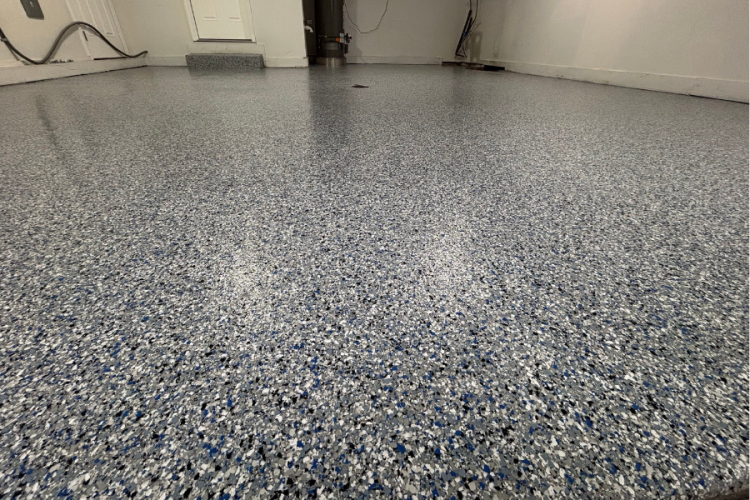
- Garage Floors: Provides a seamless, high-gloss finish that is easy to clean and maintain.
- Commercial Spaces: Used in warehouses, retail spaces, and other high-traffic areas.
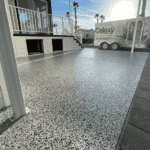
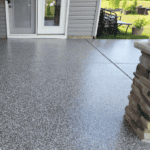
- Outdoor Areas: Suitable for patios, pool decks, and driveways due to their UV stability and slip resistance.
The Future of Concrete Coatings
What’s Next
The concrete coating industry continues to innovate, with emerging technologies focusing on sustainability, smart coatings, and enhanced performance.
Emerging Trends
- Eco-Friendly Coatings: Development of low-VOC and water-based coatings that are environmentally friendly.
- Smart Coatings: Integration of technologies that allow coatings to respond to environmental changes, such as self-healing and self-cleaning properties.
- Enhanced Aesthetics: Innovations in decorative techniques, including 3D effects, custom patterns, and more sophisticated textures.
Potential Impacts
- Sustainability: Increased use of sustainable materials and processes in coating manufacturing and application.
- Performance: Coatings that offer even greater durability, protection, and longevity.
- Customization: Greater ability to create unique, personalized spaces with advanced decorative options.
The evolution of concrete coatings from traditional sealers and paints to modern polyurea and polyaspartic systems has transformed the way we protect and enhance concrete surfaces. These advancements have not only improved durability and aesthetics but also reduced maintenance and installation times. As the industry continues to innovate, we can expect even more exciting developments that will further revolutionize concrete coatings, offering better protection, sustainability, and customization for a wide range of applications.